MeetingMentor Magazine
Exclusive: John Register on Talent Pipelines, Change and the Champion’s Mindset
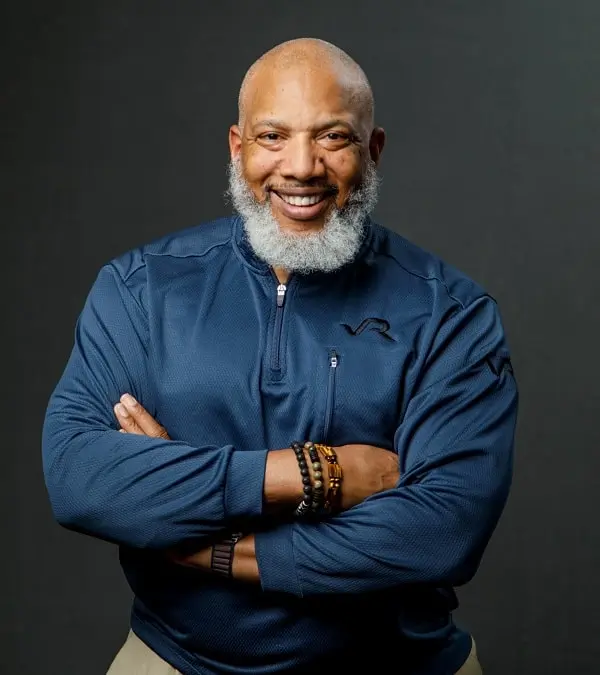 John Register is a Paralympic silver medalist in the long jump, a U.S. Army combat veteran of the Gulf War, a CPAE Speaker Hall of Fame inductee, and a fixture on Real Leaders’ list of top keynote speakers. He recently took the stage at ConferenceDirect’s D26 conference, where he spoke about building talent pipelines that can serve any audience, and about what it takes to move forward when something you relied on has been cut away. We caught up with him afterward to talk about that message, and why it matters for the meetings and events community right now.
You were invited to speak at ConferenceDirect’s D26 conference. What stood out to you about the invitation?
Once I understood what the event stood for, I saw it as a celebration of how much we all need each other to elevate our work. In the meetings and events space, there are so many moving pieces for the end client that we’re all really part of one supply chain. When you have a great pipeline of talent in that supply chain, you can deliver an exceptional event.
If your pipeline is homogenous, you’re limited in what you can deliver, because you can’t cover the full spread of needs of the people you’re serving. Here in the United States, nearly every audience is an international audience. People come from so many different walks of life and backgrounds. When you have a diverse pipeline of talent, you can solve for that and deliver at a higher level.
I was also thinking about the moment we’re in. Over the past couple of years, we’ve seen a real shift toward going back to more homogenous groups, along with the idea that some people are getting an unfair advantage. That’s not what this is about. It’s about giving opportunities to people who have been overlooked, because those in a position to open the door haven’t looked at that pipeline of talent. So I was honored and impressed that ConferenceDirect doubled down. They understand that the clients they serve need a diverse group of people delivering for them, or they’re going to lose market share.
How did you shape your message for this audience at this particular moment?
I shared something I learned from Dr. Harry Edwards, the sociologist and professor emeritus at UC Berkeley who has worked closely with the San Francisco 49ers. Around 2016, I was at the NFL’s diversity and inclusion conference, representing the U.S. Olympic and Paralympic Committee, and he said something about sustainable change that has stuck with me ever since. He said you need three elements in place to keep progress going:
- A dependable, developed pipeline of talent. Where is your talent pool coming from? If everyone in your room looks the same, you haven’t built a pipeline diverse enough to handle whatever comes up.
- A persistent and pervasive demand. Someone has to be advocating for that talent. At D26, the room was full of ConferenceDirect associates, suppliers, and clients who understand they’re part of that demand, because it affects the bottom line and how we do business.
- An organization that actually wants the talent. When all three are in place, it’s a perfect storm, and you get companies like ConferenceDirect that grow and keep doing great work. When the organization doesn’t really want the talent, it usually picks a couple of people just to satisfy the demand.
And the talent and the demand do have a say. We’ve watched companies pull back on their commitments and then feel it quickly from the very customers coming through their front door. So the question is: Are you calling wolf, or are you really doubling down on your talent and on who you are? ConferenceDirect doubled down, and I wanted to honor and celebrate that.
You also shared your “Amputate to Elevate” philosophy. What does that mean?
As an amputee, I ask: What do we need to release that’s holding us back from elevating to our highest selves?
Think about New Year’s resolutions. In November and December, the gym ads start, and everyone decides they’re going to eat better and exercise more. But we rarely make space for it. We don’t ask, “What am I going to let go of to make room for these new priorities?” So we just pile more onto our plates, and by the end of January, we’re so overwhelmed that we stop doing any of it.
I use my amputation as the metaphor. With an amputated leg, I wasn’t going to become the military officer I’d planned to be. I wasn’t going to be a world-class hurdler at the Olympic Games. I could stay in that space and complain about it, or I could get busy doing something else. That’s a blunt way to put it, and sometimes it takes a long time to get to the point where you’re ready to move forward. I walk people through a process I call reckoning, revision, and renewal, so they can see where they are and where their people might be.
That matters for organizations, too. Just because you put out a new policy doesn’t mean everyone is on board. People have to grieve what was there before. That’s why you hear, “I’ve been doing this for 20 years. Why do we have to change now?”
For many people in this industry, losing policies that had a solid business case has felt like an amputation of its own. How does your philosophy apply there?
Amputations hurt. And after an amputation, there’s a phenomenon called phantom pain. The limb isn’t there anymore, but you still have remnants of what you used to do, and that hurts. This is not easy work. You have to grieve what’s been lost before you can move forward.
Here’s something fascinating: When a limb is removed, the body absorbs the weight that limb used to carry and distributes it throughout the rest of the body. The same thing happens in organizations. When experienced, senior-level people are pushed out, including many of the people who were running conferences (and I don’t mean DEI conferences, just conferences in general), that leaves a hole. That weight is going to be absorbed somewhere, and the hole is going to be filled by something. It may not be what you’d want. We often don’t understand the ramifications of what we cut until much later.
So what can leaders and planners do when their environment shifts like that?
We can bring our own atmosphere into any environment. Let me give you an illustration.
When astronauts train for the International Space Station, they work underwater at NASA’s Neutral Buoyancy Laboratory in Houston, where a full-size mockup of the station is submerged. In space, there’s no air to breathe, and underwater, we can’t breathe either. So in both places, astronauts have to take their atmosphere with them in order to survive.
An amputation is a shift from one environment to another. In my case, from two legs to one. So I had to ask: What atmosphere do I need to survive here? Do I need a support group? A prosthetic limb? What about my attitude? Before, I’d never thought much about people with disabilities, and when I became one, I didn’t want to be one. I felt like people were looking at me differently. I had to learn to be comfortable with my prosthetic, and I forced myself to do it by wearing shorts and taking all the stares.
Because I’ve been through it and built a process around it, I can share that process with others. Not to tell them what to do, but to help them discover, in their own words, how to shift their atmosphere so they can survive in any environment.
How does that translate for the clients planners serve?
That’s why I love ConferenceDirect’s work. When clients are shifting environments, they sometimes hesitate to make a decision and move forward. My message helps them see the market share they might be missing because they’re hesitating. And that goes beyond a DEI message. It applies to anyone going through a merger or acquisition, or an incentive group, where I focus on a champion’s mindset.
I’ve competed at the Olympic and Paralympic trials, won a Paralympic silver medal, served in combat, and been a CEO. That’s a lifetime of high-level experience, and the task is to bring it into 45 minutes in a way that doesn’t preach at people, so they discover it for themselves. Once they get it, it’s theirs.
People usually hear the message in one of two ways: personally or professionally. Afterward, someone will tell me they’re thinking about a family member, or they’ll message me on LinkedIn. One woman wrote to say she quit her job after my presentation because she realized she wasn’t aligned with it, and it was the best decision she ever made. I don’t usually lead with that story, because organizations don’t want to hear about people leaving. But it really is better for the organization. That person was probably phoning it in. Let them move on to what they really want to do, and backfill the role with someone who wants to be there.
What keeps you doing this work?
Those stories are why I do what I do. I never treat a relationship like the one with ConferenceDirect as a throwaway. I don’t know who a message is going to reach, but I know I’m supposed to say it, because it might reach that one person, and that one person might go on to change something much bigger. One person can make a huge difference.
Learn more: Watch John’s conversation with ConferenceDirect President and CEO Jerry Horan, recorded at D26, on John Register Live. Special thanks to ConferenceDirect Director of Business Development Madonna Deek for bringing John to D26. Learn more about John at johnregister.com.
MORE ARTICLES FROM THIS ISSUE:
Free Subscription to
MeetingMentor Online
"*" indicates required fields
About ConferenceDirect
About MeetingMentor